Showing posts with label HEALTH. Show all posts

Tuesday, June 8, 2010

Mad Cow Disease

What Is Mad Cow Disease?

Mad cow disease is an incurable, fatal brain disease that affects cattle and possibly some other animals, such as goats and sheep. The medical name for mad cow disease is bovine spongiform encephalopathy (pronounced: bo-vine spun-jih-form en-seh-fah-la-puh-thee), or BSE for short.

It's called mad cow disease because it affects a cow's nervous system, causing a cow to act strangely and lose control of its ability to do normal things, such as walk.

How Do People Get It?

Only certain animals can get BSE — people don't actually get mad cow disease. However, experts have found a link between BSE and a rare brain condition that affects people, called variant Creutzfeldt-Jakob disease (vCJD). Researchers believe that people who eat beef from cows that have BSE are at risk of developing a form of vCJD.

Monday, June 7, 2010

Wilson's Disease: Inherited Disease of Toxic Copper Accumulation

Due to a failure of copper excretion in the liver, toxic levels of copper build up and cause damage to the liver and central nervous system.

http://www.chemgapedia.de/vsengine/media/vsc/de/ch/4/cm/komplexe/bilder/kf2.jpg
Wilson's disease or Wilson disease or hepatolenticular degeneration is an inherited disorder involving toxic accumulation of copper in the liver and the central nervous system (CNS). Accumulation in the CNS usually occurs in the sites of the basal ganglia and globus pallidus. These symptoms are all due to a failure of copper excretion by the liver.

Genetics of Wilson Disease

The incidence of Wilson's disease is 3 in 100 000. It is an autosomal recessive disorder where there is a mutation on the ATP7B gene, an ATPase, which is a copper transporter on chromosome 13. There are many known mutations but the most common is HIS1069GLU which is most common in the European population.

Clinical Features of Wilson's Disease

Children can present with liver disease and this can be expressed as fulminant liver failure, hepatitis, or cirrhosis. In young adults, one can see CNS signs such as tremor, dysarthria, dysphagia, dyskinesias, dystonias, dementia, and parkinsonism. They can also develop affective features such as depression or mania, labile emotions, fluctuating libido and personality changes. With regards to their cognition, memory can decrease and problem solving can become increasingly difficult. A famous sign of Wilson disease is the presence of Kayser-Fleischer rings, which are copper deposits in the iris.

Tests and Diagnosis of Wilson Disease

In patients with Wilson's disease, serum copper and serum caeruoplasmin are usually decreased. One can test with a 24 hour urinary copper excretion. Molecular testing is available to look for mutations in the ATP7B gene and to make a definitive diagnosis. Magnetic resonance imaging (MRI) is often used to look for signs of basal ganglia degeneration.

Management and Treatment of Wilson's Disease

Patients with Wilson's disease are on lifelong penicillinamine.

Penicillinamine is a metabolite of peniciliin but it has no antibiotic properties. It is a chelating agent that binds to accumulated copper and is then eliminated through the urine. Some possible side effects of penicillinamine are nausea, rash, low white cell count, anemia, thrombocytopenia, and haematuria.
Reblog this post [with Zemanta]

Liver

is the only internal human organ which can regenerate


What is the Liver?
The liver is the largest glandular organ of the body. It weighs about 3 lb (1.36 kg). It is reddish brown in color and is divided into four lobes of unequal size and shape. The liver lies on the right side of the abdominal cavity beneath the diaphragm. Blood is carried to the liver via two large vessels called the hepatic artery and the portal vein. The heptic artery carries oxygen-rich blood from the aorta (a major vessel in the heart). The portal vein carries blood containing digested food from the small intestine. These blood vessels subdivide in the liver repeatedly, terminating in very small capillaries. Each capillary leads to a lobule. Liver tissue is composed of thousands of lobules, and each lobule is made up of hepatic cells, the basic metabolic cells of the liver.
What is its major function?
The liver has many functions. 

Some of the functions are: 

-to produce substances that break down fats,
-convert glucose to glycogen,
-produce urea (the main substance of urine),
-make certain amino acids (the building blocks of proteins), 
-filter harmful substances from the blood (such as alcohol), 
-storage of vitamins and minerals (vitamins A, D, K and B12) and 
-maintain a proper level or glucose in the blood. 
-The liver is also responsible for producing cholesterol. It produces about 80% of the            cholesterol in your body.

Diseases of the Liver
Several diseases states can affect the liver. Some of the diseases are Wilson's Disease, hepatitis (an inflammation of the liver), liver cancer, and cirrhosis (a chronic inflammation that progresses ultimately to organ failure). Alcohol alters the metabolism of the liver, which can have overall detrimental effects if alcohol is taken over long periods of time.
Hemochromatosis can cause liver problems.

Medications that negatively effect the liver

Medications have side effects that may harm your liver. Some of the medications that can damage your liver are: serzone, anti-cancer drugs (tagfur, MTX, and cytoxan), and medications used to treat diabetes.

Serzone is a prescription drug manufactured by Bristol-Myers Squibb for the treatment of depression.

The possible side effects of Serzone® are: agitation, dizziness, clumsiness or unsteadiness, difficulty concentrating, memory problems, confusion, severe nausea, gastroenteritis, abdominal pain, unusually dark urine, difficult or frequent urination, fainting, skin rash or hives yellowing of the skin or whites of the eyes (jaundice) or a prolonged loss of weight or loss of appetite.
If you or a family member have suffered serious side effects or a fatal injury after taking Serzone®, you or the family member may be eligible to file a claim against the manufacturer. You should contact an attorney that specializes in class action lawsuits immediately.
To help prevent liver damage, let your doctor know about your liver condition when being treated for other conditions. Medications come in many forms and it is best to find out what is in them and what it can do to your liver.
Reblog this post [with Zemanta]

Tuesday, December 22, 2009

Fungus Infections

Skin fungus infections are hard to recognize. The itching, flaking, redness, and thickened skin of fungal infections can look just like other types of dermatitis or skin allergies. In fact, eczematous skin often becomes infected with fungi, so both are present simultaneously. Doctors use microscopes to help them diagnose skin fungus infections, so there’s no way you can really be sure at home. The Advisory will focus on the five most easily recognized skin fungus infections, but even after looking at the pictures don’t be too confident.

Athlete’s Foot (tinea pedis).

Athlete's foot is a fungal infection of the <span class=sk...">


Every year, over 10% of the U.S. population develops this problem. Probably 75% of us will have athlete’s foot at some time during our lives. The most common form occurs between your third, fourth, and fifth toes, sometimes spreading to the sole. Between the toes, your skin becomes white, moist, and easily rubbed off; the tops of the toes may be red, dry, and flaky. Intense itching and burning are the rule. Athlete’s foot usually occurs with hot, moist conditions, or if you wear shoes constantly.

Jock Itch (tinea cruris). The same conditions of heat, moisture (sweat) and poor air circulation leading to athlete’s foot also cause fungus infections of the groin, or jock itch. As its name implies, intense itching and burning are the usual symptoms. You will also find redness, flaking and peeling on the inner thighs, pubic area, and scrotum.

Ringworm (tinea corpora).

ID#: 2938 Description: This patient presented ...

It is caused by a microscopic fungus, not a worm. The infected area spreads out slowly from its central starting point and creates a slightly raised, intensely red ring surrounding a less red, flaky, itchy area. Over weeks, the ring slowly enlarges. It can occur anywhere on the body and in multiple sites at once, so it’s often confused with other kinds of dermatitis.

Candidiasis.

Oral candidiasis on the tongue and soft palate.Image via Wikipedia


Theis brownish-red, itchy discoloration affects the underarms, corners of the mouth, rectal area, and beneath the breasts. The same type of fungus causes vaginal yeast infections (candida albicans).

Tinea Versicolor. This fungus actually changes the color of the skin it infects; the patches may be lighter or darker than your normal surrounding skin. This spotted pattern and the fine scaly flakes at the

ID#: 2914 Description: This photograph shows a...margins make this fungal infection the easiest to identify. Since itching and irritation are mild, it’s also the least bothersome.


Warmth, humidity, sweating, and poor air circulation all help bring about these fungal infections. But they are contagious, too. Athlete’s foot is believe to be passed on locker room and shower floors, and by sharing footwear and socks; you can acquire tinea versicolor from vinyl surfaces of weight lifting benches; and of course ringworm is contagious through direct contact (usually kids).

Because of all these factors, prevention is a matter of both personal hygiene and minimizing contact with potential carriers or contaminated objects.

There are several effective OTC anti-fungal medications. Because different fungi affect different locations, medications are sometimes specific for those locations. The recommendations below should help you sort it out.

Athlete’s Foot - Tolnaftate is the only OTC medicine approved for both prevention and treatment of athlete’s foot. Be patient, though. It could take a month or more of daily treatment for it to completely clear. Consider preventive use if the condition recurs.

Tinea Versicolor - Although not a Category I agent, selenium sulfide shampoo is universally recognized by dermatologists as an effective OTC remedy for tinea versicolor. Since it often affects large areas of the trunk, applying this shampoo once a day for five minutes, then washing off, is a lot easier and cheaper than using a whole tube of anti-fungal cream twice daily. Tinea versicolor also tends to recur easily, but this shampoo can prevent it if used once a week after the initial 2-4 week treatment cycle.

Candidiasis, Ringworm, and Jock Itch - Miconazole or clotrimazole are quickly effective (1-2 weeks) for each one of these conditions, and come in cream, lotion, or spray. Avoid alcohol-based products since they can sting chafed and delicate skin.


Courtesy--http://quickcare.org/skin/fungus.html

Images-- Wikipedia,Flickr

hEALTH dOSE (BCG)

BCG - the current vaccine for tuberculosis
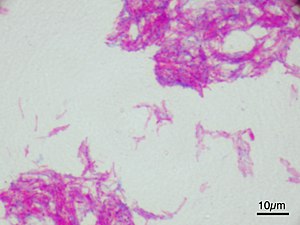
microscopic image of the bacille Calmette-Guér...

Bacille Calmette Guerin (BCG) is the current vaccine for tuberculosis. It was first used in 1921. BCG is the only vaccine available today for protection against tuberculosis.
It is most effective in protecting children from the disease.

History of the vaccine

Bacille Calmette Guerin (BCG) containes a live attenuated (weakened) strain of Mycobacterium bovis. It was originally isolated from a cow with tuberculosis by Calmette and Guren who worked in Paris at the Institute Pasteur. This strain was carefully subcultured every three weeks for many years. After about thirteen years the strain was seen to be less virulent for animals such as cows and guinea pigs. During these thirteen years many undefined genetic changes occurred to change the original stain of M. bovis. This altered organism was called BCG. In addition to the loss of virulence, other changes to BCG were noted. These included a pronounced change in the appearance of colonies grown in the laboratory. Colonies of M. bovis have a rough granular appearance whereas colonies of BCG are moist and smooth.

Today there are several strains of “BCG”.

BCG was first used as a vaccine to protect humans against tuberculosis in 1921.
At first, cultures of BCG were maintained in Paris. Later, it was subcultured and distributed to several laboratories throughout the world where the vaccine strain called BCG continued to be maintained by continuous subculture. After many years it became clear that the various strains maintained ain different laboratories were no longer identical to each other. Indeed, it was likely that all the various strains maintained by continuous subculture continued to undergo undefined genetic changes. Indeed, the "original" strain of BCG maintained at in Paris had continued to change during the subcultures needed to maintain the viability of the culture. To limit these continuing changes the procedures needed to maintain the strain were modified. Today, the organism is maintained in several laboratories using a "seed lot" production technique to limit further genetic variation using freeze-dried (also called lyphilized) cells so that each batch starts with the same cells.

Safety

After extensive tests in animals, BCG was first used as a vaccine in 1921. It was given orally to infants. Since this time the vaccine has been widely used. Today, it is estimated that more than 1 billion people have received BCG.

BCG is widely used and the safety of this vaccine has not been a serious issue until recently. There is a concern that use of the vaccine in persons who are immune compromised may result is an infection caused by the BCG itself. Also, even among immune competent persons, local reactions, including ulceration at the site of vaccination may result in shedding of live organisms which could infect others who may be immune compromised.

The early use of BCG was marked by a tragic accident. In Lubeck more than 25% of the approximately 250 infants who received a batch of the vaccine developed tuberculosis. It was later recognized that this batch was accidentally contaminated with a virulent strain of M. tuberculosis.

BCG production and substrains

The BCG vaccines that are currently in use are produced at several (seven?) sites throughout the world. These vaccines are not identical. To what extent they differ in efficacy and safety in humans is not clear at present. Some differences in molecular and genetic characteristics are known. What is not known is if the "BCG" from one manufacturer is "better" than one produced at another site. Each BCG is now know by the location where it is produced. For example, we have BCG (Paris), BCG (Copenhagen), BCG (Tice) and BCG (Montreal) among others.

Friday, October 9, 2009

J&J medical to launch insulin pumps in India by 2009 end

Johnson and Johnson Medical India, plans to introduce its ‘insulin pump’ for diabetes patients in the country by end of this year, a top company official said. 

“We are planning to launch insulin pumps in India by this December,” Johnson and Johnson Medical India, Managing Director, A Vaidheesh, told PTI here.


The company will be initially launching 3,000 insulin pumps and then would up it to 4,000 units next year, Mr. Vaidheesh said.
Priced at between Rs 50,000-75,000 per pump,

The device will be imported from the US, where the device is being manufactured and where it has proved efficient for users,

The device to be attached to the patient’s body for 24-hours, helps monitor and regulate insulin levels while delivering the drug at a steady rate suited to an individual’s needs.

The pump also needs a catridge which is priced at Rs 50 and needs to be refilled every day.
The company is aggressively concentrating on diabetics control in India as there was an immense potential in this segment,

The number of diabetics was growing in the country, he added, adding initially the company expected around 5 per cent of the total diabetic population in the country to use the company’s product.

Friday, October 2, 2009

Cell Division

events involving meiosis, showing chromosomal ...Image via Wikipedia
I Cancer - Practical Applications and Cellular Reproduction

A) Definition of Cancer
1) neoplasm of proliferating cells, cell division out of control, cells
produced are useless, compete with healthy cells for nutrients
and oxygen
2) Benign versus malignant
a) benign is a sedentary mass of cancerous cells
b) malignant is a moving mass of cancerous cells
metastasis
3) Basic types
a) carcinoma - arises from body's outer coverings and inner linings
b) sarcoma - arises from body's supporting structures
c) lymphoma - arises from lymph system
d) leukemia - arises from blood marrow in bone, spleen
B) Causes of Cancer
1) Carcinogenic chemicals
2) UV Light
3) Viruses
4) Mechanism - mutations and oncogenes
a) cell growth is no longer under control, mutagenic agents
cause mutations in proto-oncogenes (genes that encode for
proteins that stimulate cell division and growth), these genes become
oncogenes that cause cancer
Problem
Effect
Mutation in proto-oncogene
creates hyperactive protein
Multiple copies of a gene
produces excess amount of protein
Movement of gene locus
no longer under control from original locus, produces excess amount of protein
  5) Mechanism - mutations to tumor-suppressing genes
a) mutation in a gene that inhibits cell division, produces
a faulty protein that can not stop cell division
C) Consequences
1) alteration of DNA
2) Cancerous growth - tumor or polyp
D) Diagnosis
1) Radiology (x-rays and dyes)
2) Ultrasound imaging
3) Endoscopy - fiber optics (example - colonoscopy, inside the esophagus)
4) Biopsy
5) Monitoring chemical levels in the blood (blood testing)
6) Mammogram for breast cancer

E) Treatments
1) Surgery (physical removal)
2) Radiation Therapy (Radiation - high energy particle beams)
3) Chemotherapy (cytotoxic drugs - chemotherapeutic agents)
disrupts DNA synthesis or mitosis, affects normal cells also
some bad side-effects
4) Hormone therapy - used for cancers associated with sex hormones
tamoxifen suppresses estrogen used to treat breast cancer
anti-androgens used to treat prostate cancer (reduce androgen levels)
5) Boosting the immune system (stimulate the production of cells that
recognize healthy versus unhealthy or cancerous cells)
6) Diet
7) Monoclonal antibodies - silver bullets, respond to protein on cancer cell
surface and deliver cytotoxic drug
F) Types of Cancers - some examples of virus related cancers
1) Leukemia - associated with bone marrow cancer
2) HIV - associated with cancers in blood vessels (Kaposi's Sarcoma)
3) Hepatitis B, C virus - associated with liver cancer
4) Papilloma virus - causes genital warts and benign cancers, associated with cervical cancer
G) Types of Cancers - some examples of Carcinogen related cancers
1) Lung cancer - tobacco
2) oral cancer - chewing tobacco
3) Bladder and rectal cancer
H) Types of Cancers - some examples of Light related Cancers
1) UV light - lesions and melanomas
I) Other cancers
Breast cancer in females and males
Prostate cancer in males
J) Summary - types and incidence

II Cellular Reproduction

A) Two types of cell division
1) Mitosis and Fission- results in exact duplication of parent cell (2N to 2N)
Binary Fission - special cell division in bacteria
2) Meiosis - results in production of gametes (2N to 1N)
B) Mitosis
1) Functions
a) cell reproduction
b) replacement of cells
c) healing
d) growth
e) regeneration (in some organisms)
2) Phases
a) Cell cycle (cell division, G1, S - duplication phase, G2)
b) S phase - duplication of chromosomes, sister
chromatids bound by centromere
c) Prophase (appearance of chromosomes)
d) Metaphase (lining up along the equator)
e) Anaphase (splitting of the chromosomes)
f) Telophase (segregation, cell plate appears in plants)
g) Differs between plants and animals
animals (see whitefish blastula above)
plants (onion root tip you will observe in lab)
h) Cytokinesis (splitting of cytoplasm) not part of mitosis
in animals
C) Meiosis - characteristics
1) Function - sexual reproduction
a) diploid (2N) adult produce gametes (sperm, eggs = haploid - 1N)
2) two cell divisions in order to produce haploid gametes
3) restricted to gonads
D) Meiosis - mechanics of the phases
1) Meiosis I: prophase I, metaphase I, anaphase I, telophase I
a) metaphase I - homologous pairs line up across the equator
from each other
b) anaphase I - homologous pairs are split (reduction of
chromosomes = 2N - 1N condition)
2) Meiosis II: prophase II, metaphase II, anaphase II, telophase II
a) metaphase II - chromosomes line up along the equator
like they were going through a mitotic division
b) anaphase II - chromatids are split by breaking the
centromere (in animal cells)
E) From Meiosis to gamete production
1) Making sperm
Cell Type
Cell Division
Product
Spermatagonium (2N)
Undergoes Mitosis
Primary Spermatocyte (2N)
Undergoes Meiosis I
2 Secondary Spermatocytes (1N)
Secondary Spermatocyte (1N)
Undergoes Meiosis II
Spermatid (1N)
Spermatid (1N)
Maturation - no cell division
Sperm cell (1N)

2) Making eggs
Cell Type
Cell Division
Product
Oogonium (2N)
development - no cell division
Primary Oocyte (2N)
Primary Oocyte (2N)
Undergoes Meiosis I
Secondary Oocyte (1N) and First Polar Body (1N)
Secondary Oocyte (1N)
Undergoes Meiosis II (stimulated by fertilization from sperm)
Ovum (1N) and Second Polar Body (1N)


F) Maintaining Genetic Variation
1) Genetic Recombination
2) Crossing Over

Thursday, September 24, 2009

एड्स के ख़िलाफ़ अहम सफलता


वैज्ञानिकों का कहना है कि उन्होंने एक ऐसा टीका बना लिया है जो एड्स फैलानेवाले वायरस एचआईवी के ख़तरे को तीस प्रतिशत कम कर देगा.
थाईलैंड में अपनी इच्छा से आगे आए सोलह हज़ार लोगों पर इस टीके का परीक्षण किया गया है और इस पूरे कार्यक्रम के लिए पैसा अमरीकी सेना की तरफ़ से दिया गया.

एड्स के क्षेत्र में काम करनेवाले कई जानकारों ने इसे एक ऐतिहासिक मील का पत्थर बताया है.

वैसे तो ये टीका फ़ौरन ही दुकानों या अस्पतालों में पहुंच जाएगा ऐसा होता हुआ नहीं दिख रहा लेकिन इतने ज़्यादा लोगों पर पहली बार इस तरह का परीक्षण हुआ है और पहली बार सही मायने में उम्मीद जगी है कि एड्स का एक संपूर्ण टीका बनाया जा सकता है.

पूरी दुनिया में तीन करोड़ तीस लाख लोग एचआईवी से ग्रस्त हैं.

अबतक दवाओं से लोगों को कुछ राहत मिली है लेकिन पहली बार एक टीका बना है जो इसे रोक सके.
यहां तक पहुंचने में भी वैज्ञानिकों को सात साल लगे हैं.
वैसे तो इसकी शब्दावली काफ़ी जटिल है लेकिन आसान ज़ुबान में यही कहा जा सकता है कि ये टीका एचआईवी के संक्रमण के ख़तरे को कम करने में 31.2 प्रतिशत कारगर है.
थाईलैंड में हुए एक संवाददाता सम्मेलन में कहा गया कि ये टीका पूरी तरह कारगर तो नहीं है लेकिन सही दिशा में उठाया गया एक महत्वपूर्ण कदम है.
लैंसेट मेडिकल जरनल के संपादक डॉ रिचर्ड हर्टन कि इस टीके की खोज काफ़ी उत्साहजनक है और इससे कुछ शंकाओं के साथ ही सही लेकिन उम्मीद बढ़ती है.
इस टीके से दुनिया भर में चल रहे उन शोधों को भी मदद मिलेगी जहां कोशिशें चल रही हैं एक पूरी तरह से कारगर टीका बनाने की.